-->
Showing posts with label Baltimore. Show all posts

Sunday, December 10, 2023

Christmas Cheer - Part 8

It's been about a week since I've posted information about the tracks of my 19th and latest holiday mix, Christmas Cheer, so I'd say it's high time to get back to the task at hand. Here's a little background on three more of this year's tracks:

Track 23
First Snowfall, The Coctails (1993)

I first heard this pretty little tune on A John Waters Christmas, a compilation of oddball holiday tunes curated by the infamous director of such films as Polyester (1981), Pink Flamingos (1972) and Female Trouble (1974). I went to college in Baltimore, where Waters is a genuine celebrity, and listening to his holiday collection made me feel like I was an undergraduate again, roaming the streets of Fells Point and Waverly.
Kitty's Lounge in Baltimore's Waverly Section

I loved Baltimore in the late 1970s. I'd grown up in a beautiful town called Dover, Massachusetts, about 45 minutes southwest of Boston, It was an idyllic community with thousands of acres of protected woodlands and very few major problems. Baltimore was different in so many ways. There was poverty, crime, racial tensions, decay; but there was also excitement and character. The world just beyond our campus offered the promise of adventure and danger, and I resolved to spend as much time in it as possible. It opened my eyes to what was then a whole new world to me.

Along with two friends, I applied for a cashier position at the local Rite Aid pharmacy. Applicants were required to take a polygraph test as part of the hiring process, which I apparently passed. To my surprise, my two friends didn't, but despite my disappointment and a certain amount of trepidation I took the job. I'm glad I did. I probably learned more in the 20 hours I worked at the Rite Aid each week than I did in class, and I wound up making some very good friends among the local community. In my senior year I became an intern for the area's neighborhood council and wrote my senior paper on the role such groups can play in less affluent urban communities. I learned a great deal, and some of the lessons were painful. I once saw a purse snatching on Greenmount Avenue and chased the thief nearly a dozen blocks to retrieve what he'd taken. The pride I felt returning the elderly victim her purse soured a little when she confessed that all she had in the purse were a few Rite Aid discount coupons and around a dollar in loose change. I also befriended another elderly woman who lived in a pitiful single room and often ran through her monthly income well before the end of the month.

Two of my Rite Aid Coworkers, 1979

“First Snowfall” is probably the tamest song on A John Waters Christmas — a sweet instrumental number that I’m told features someone playing a hand saw. The Coctails were a Chicago-based band that formed when the members were all attending the Kansas City Art Institute. They were active from around 1988 through the mid ‘90s and regrouped several times after that for brief reunion shows.

The band consisted of members Archer Prewitt, Mark Greenberg, John Upchurch, and Barry Phipps. While they were often described as a lounge band — due, in part, I'm guessing, to their name — The Coctails described themselves as a “garage jazz” band. They were rather prolific during the seven or eight years they made records, and their music actually included songs of many different styles.

The members were also heavily into the visual arts, and they even created a print shop at one point where they made posters, cards and such to promote the band and create other projects. A Japanese company later marketed a set of four action figures depicting the members of the band, and a book was published featuring the album covers and promotional materials created by the group.

I understand that in 2010, during one of the band's several reunions, they recorded a version of Erik Satie's "GymnopĂ©die No. 1,” probably one of the most beautiful tunes ever written. Try as I might, I haven't been able to locate a copy.


Track 24
Let Us Be Gay, Bobbi Boyle (1973)

This one's another song-poem, from the album Peace is a Song to Cherish, which featured tunes by two different M.S.R. acts: Bobbi Boyle and the M.S.R. Singers  and Dick Kent and The Lancelots. M.S.R. was one of the biggest of the song-poem mills that operated in this country throughout the 1960s. '70s and '80s. The company name comes from the initials of its founder, Maury S. Rosen, and it's been estimated that they produced more than 3000 45s and something like 300 compilation albums before winding down in 1983. Boyle, who sometimes went by the name Bobbi Blake, was one of the group of M.S.R. staff who comprised The Sisterhood, M.S.R.'s go-to group of  female Singers.

I first heard this song on one of the terrific Mondo Diablo podcasts from Hellbound Alleee, an atheist and song-poem enthusiast from Wenatchee, Washington, whose real name was Alison Randall. I used to love listening to her podcasts, which covered a wide spectrum of issues and included lots of diverse holiday music each year. The Christmas podcasts in particular were exceptionally well-curated, and it's clear she put a great deal of work into each show. Sadly, Alison died of cancer in 2019. Her husband, Francois Tremblay, has been posting her podcasts on her YouTube channel so they can be more readily accessible. You might want to stop in a take a look around. Start with any of the Christmas shows and you'll probably wind up listening to some of the other ones. Allee was outspoken, genuine and fearless, and she's missed by many, including me.

Like so many of the old song-poems, there isn't an awful lot of information available about "Let Us Be Gay." I don't know who wrote the words that M.S.R. set to music, but I'm sure wherever the lyricist now resides, he/she is pleased to learn that we're listening to her work as the world falls apart around us in 2023.

You can hear "Let Us Be Gay" in the player, below, starting at around 1:09:49. Thanks to WFMU-FM for providing the player and its content, which features a collection of nostalgic and offbeat holiday tunes from Bill Mac's show The Zzzzzero Hour from December 25, 2010. Enjoy!


Track 25
My Christmas Dream, Dian Rosamond (1975)

I can't remember where or when I found this holiday song-poem and the only information I have to offer is that it was released on the Halmark (sometimes spelled "Hallmark") label.  

I did discover that there is a woman named Dian Rosamond who apparently wrote a short story titled "Obsession," that looks to me to be rather odd. I have no idea whether there's any connection to the singer of "My Christmas Dream," but who knows?

Here's the song, for your holiday enjoyment:


I recently learned of another Halmark song-poem that marries a different set of lyrics to the same tune and arrangement as "My Christmas Dream." It's called "The Christmas Message" and is credited to Raymond Spence, which is interesting because the vocalist is a female who sounds exactly like the woman singing "My Christmas Dream." I discovered the second of these two songs courtesy of Bob Purse's excellent blog titled The Wonderful and the Obscure. I sure hope they didn't charge full-price to both lyricists for the same tune.

That's all for now. I'll be back with more sometime soon.

Friday, October 20, 2023

RIP: Dwight Twilley, Power Pop Pioneer and Christmas Music Creator, 72

Dwight Twilley, 1951-2023


Power-pop singer-songwriter Dwight Twilley who enjoyed chart success in the 1970s and '80s with the hits "I'm on Fire" and "Girls," died this past Wednesday, October 18, in his native Tulsa, Oklahoma at the age of 72. According to the Los Angeles Times, Twilley suffered a stroke while driving his car last weekend and sustained serious injuries when the car struck a tree. He died of those injuries four days later.

Interested in music from a young age, Twilley paired up in 1967 with fellow Tulsa resident Phil Seymour, whom he met at a screening of the Beatles' film "A Hard Days Night." The two started writing and playing songs together almost immediately and formed a band they called Oister. They developed a sound that emphasized hooks, harmonies and ringing guitars — a sound that came to be known as "power pop." After meeting with executives at Sun Records in Memphis, they began recording for Shelter Records in Los Angeles. In 1975, Shelter released their song "I'm on Fire" under the name the Dwight Twilley Band, and the song became a surprise hit, reaching #16 on the Billboard Hot 100.

Unprepared to take advantage of their initial success, their first album was thrown together quickly but not released until late 1976. The follow-up album "Twilley Don't Mind" earned strong reviews but disappointing sales. Seymour left the group in 1979, leaving Twilley to soldier on as a solo performer. While his single "Girls" became an early hit on MTV and also made it to #16 on the Hot 100, subsequent releases failed to match his early success or industry expectations.

Holiday music fans may remember Twilley's 2004 EP "Have a Twilley Christmas," which featured six excellent original holiday tunes. Two of these were included on previous holiday mixes of mine. "Snowman Magic" appears on my 2010 CD "Winder Wonderland," and "Christmas Stars" was included as part of my 2018 mix "My Christmas Time Philosophy." The latter tune is also featured on the special extra mix "21st Century Holiday Classics," which I posted on my holiday music website only yesterday.

I recall buying and enjoying "Twilley Don't Mind" back in 1977. "Looking for the Magic" was among the most frequently played songs on my weekly show on WJHU-FM in Baltimore during the fall of 1978.

Although he never enjoyed the popularity he deserved, Twilley left his mark on popular music. He'll surely be missed this Christmas.

Thursday, December 21, 2017

It's Christmas Time Again, Part 5

Here we come with notes on four more of this year's tracks, including the second of the 12 songs on this year's mix that pay homage to one of the many entertainers we lost during 2017. Since we first started recognizing recently departed entertainers in this way several years ago the list of recent deaths has grown longer with each passing year, and this year's list includes some real superstars and trailblazers. Here are the next four tracks:

Track 16
It's Christmas Time Again, by Harley Poe (2006)
I ran across this little gem on an EP from several years ago called "A Very Standard Christmas," which featured holiday tunes from artists on the Standard Recording Records label. It's by a group named Harley Poe, which has been described as a "[h]orror infused folk punk act out of Kokomo, Indiana." With a rap like that, you just know these guys have got to be infused with the Christmas spirit, right? The band was formed by the former lead singer of Calibretto 13, a "Christian surf punk band" (I kid you not), only I'm told that Harley Poe dropped the Christian angle. Another blogger describes the act this way:
Horror-folk artist Harley Poe is one of the fright scene’s best-kept secrets. He’s kinda like Voltaire, but less pretentious and actually funny. This is probably the best “Santa as a serial killer” song ever. Sleigh bells and jangly guitars back a stern warning about making Santa’s acquaintance on Christmas. You don’t want to find out what’s in his sack!


Any wonder why I chose to make this cut the title track of this year's mix?

Check out the Blog of Harvey Poe Front Man Joe Whiteford


Track 15
The Christmas Song, Mark Jonathan Davis as Lt. Hikaru Sulu (1995)
See notes to Track 8, HERE.

Track 14
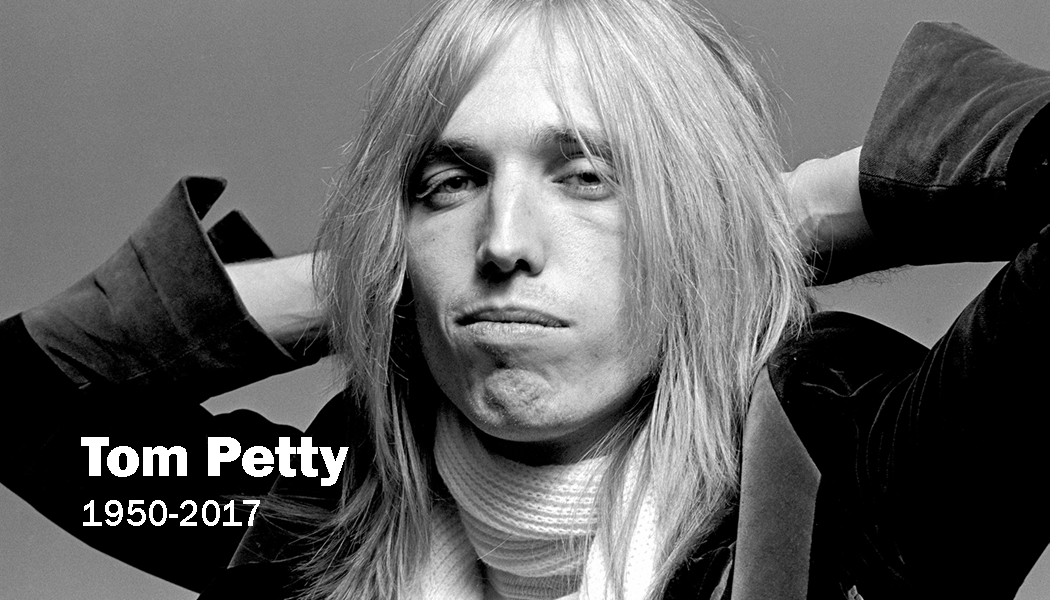
Christmas All Over Again, Tom Petty and the Heartbreakers (1992) 
The death of Tom Petty on October 2 was unexpected and profoundly sad, as he was, in many ways at the top of his game and widely recognized as among the most successful musicians in rock history. He had spent the previous six months on a nationwide tour with his longtime band the Heartbreakers, finishing it up with a hugely successful performance at the Hollywood Bowl exactly one week before his death. Between his work with the Heartbreakers and the Traveling Wilburys and as a solo performer, Petty sold close to 90 million records, and he was inducted into the Rock and Roll Hall of Fame in 2001. I had a couple of different shows at my college radio station in Baltimore, WJHU-FM, and I prominently featured Petty's music on each of them. Starting with "Breakdown" in 1977, "I Need to Know" the following year, the album "Damn the Torpedoes" in 1979 and 1981's "Hard Promises," there was always a Tom Petty record within easy reach of my turntable.

"Christmas All Over Again was released in 1992 on "A Very Special Christmas 2," the second in a series of compilations of holiday songs by established rock artists to benefit the Special Olympics. Petty contributed another song, a fine version of the blues classic "Little Red Rooster," to "A Very Special Christmas 5."


Track 13
The Best Santy Claus I Ever Heard, Andy Griffith and Don Knotts (1960)
Don Knotts as Deputy Barney Fife
As I noted five years ago, The Andy Griffith Show has always been one of my very favorite programs. I ran across this brief clip several years ago on the wonderful Check the Cool Wax blog and adding it to the mix was an easy call. I could be way off on this, but I think including short little bits like this between songs not only helps to break things up but also seems to pick up the pace of the whole CD, thereby making for a more upbeat feel. If you don't believe me, search for any of the classic Check the Cool Wax mixes, many of which are relatively easy to find via Google. Unfortunately, I've only just now noticed that the blog seems to have stopped in its tracks in early 2015 and I've been unable to locate any explanation anywhere. I'm hoping there's some good explanation for this -- like maybe the blog switched to a different hosting service? The blog's author who goes by the name Brainwerk is obviously a very talented entertainer who's responsible for a lot of smiles and laughter -- not just during the holiday season but throughout the year. I hope all's well.

This clip comes from Season 1 Episode 11, of The Andy Griffith Show, "The Christmas Story," and it's a classic. It's also the only Christmas-themed show in the entire series. While many episodes of this series are apparently in the public domain and therefore freely available online, this one isn/t. The only version I could come across is available HERE, but it comes in a pretty creepy format. See if you can block the woman watching with you from your mind while you watch. I know I couldn't.

Watch Matt Lauer's 1996 Today Show interview with Andy Griffith and Don Knotts


Sunday, December 6, 2015

Deck Those Halls, Part 4 (Tracks 10-12)

Here are some random thoughts about the next three tracks on my latest holiday mix, Deck Those Halls!:

Track 12
Holiday Greetings from Bill and Hillary Clinton (1997)
Things can change pretty quickly in politics, but, for the moment at least, it's looking like Hillary Clinton will likely be the Democratic nominee and win election next year as President. I wanted to be president myself when I was a child. Now, I can't imagine why anyone would want the job -- and I'm a little wary, frankly, of anyone who seems to want it too much. Still, perhaps we should all be getting ready to hear at least four more messages like this one, don't you think?

Track 11
Deck the Halls, by The Klezmonauts (1998)
Tonight is the first night of Hanukkah, which absolutely makes it a night to celebrate. And what better way to celebrate than with a rousing dose of klezmer music! But a klezmer version of Deck the Halls?! Well, why not? In fact, the Klezmonauts 1998 album Oy to the World gives the klezmer treatment to a collection of traditional songs and the result is a rollicking good time. A customer named Martin Keller wrote a wonderful review on amazon.com that I'd say captures the spirit of things pretty well:
Oy to the World! is an unrepentant collection of traditional carols, hymns, and Christmas high jinks played in the rousing, Jewish klezmer tradition. Talk about worlds colliding, this set throws its considerable, klezmetric weight around, turning the real "Joy to the World" into a dramatic, jazzy piece that swings and romps. With a few witty musical asides sprinkled into select songs among the 10 tracks, the Klezmonauts' only fault is that they may be too hip for the holiday party. Guaranteed either to send goyim fleeing from the room or your Yiddish grandmother rushing into the room to see what's the matter. In any event, it's fun, funny, and as effective as a shot of Jägermeister and just as unkosher. 
As much as I truly enjoyed the group's treatment of the traditional carols, my personal favorite has got to be Santa Gey Gezunderheit (Santa, Go in Good Health). Would that we could all enjoy a little more of this kind of fun over the holidays, secure in the knowledge that nobody was going to be shot as a result.


Track 10
Christmas at K-Mart, by Root Boy Slim and the Sex Change Band (1979)
Here's another artist from Bawlmer, and like "Fat Daddy" Johnson, the "the 300-pound King of Soul" who was responsible for creating one of yesterday's featured tracks, Root Boy Slim lived awfully fast and died way too young. Born in Asheville, NC as Foster MacKenzie III, he bounced around among a number of elite prep schools before winning a full scholarship to Yale. In New Haven, he played football, majored in African American studies and pledged for the same fraternity as George W. Bush. In fact, Bush allegedly had MacKenzie banned from the house after he tried to visit the place after graduation. 
Foster MacKenzie III

Armed with his Yale diploma, MacKenzie held a variety of short-term largely unskilled jobs for a while, including a stint as an ice cream truck driver. He was allegedly arrested for climbing the White House fence after taking LSD and wound up being committed to St. Elizabeth's mental hospital, where he was diagnosed as schizophrenic.

By the mid 1970s, MacKenzie had formed a band called Root Boy Slim and the Sex Change Band, which eventually made quite a name for themselves in the mid-Atlantic area. I can remember seeing them perform at The Marble Bar in Baltimore when I was in college; in fact, the crowd I hung with at the time was especially keen on Root Boy and The Original Fetish, another band with a sizeable following in the DC area. 

I'm not sure quite what I can tell you about "Christmas at K-Mart" other than the fact I've been meaning to include it on one of my mixes for at least the past several years. It's a classic. And so was Root Boy.


Deck Those Halls, Part 3 (Tracks 7-9)

I'm running behind schedule this year, which is hardly unusual, but it is frustrating. Due to printer problems, I haven't even started making the discs I send to friends and family yet, and with a mere 20 days to go before Christmas, I've only written about six of the 42 tracks on my latest mix, Deck Those Halls! I'd say it's time to pick up the pace a little, right? So without further ado . . . here's the lowdown on tracks 7 through 9:

Track 9
Holiday Greetings from Tito, Marlon and Jackie Jackson
Tito, Jackie and Marlon Jackson
The story of the Jackson family is a truly extraordinary saga that contains just about every element of the human condition. Born into relatively modest surroundings, the children of Joe and Katherine Jackson have experienced unbelievable levels of success and adoration, and yet they also seem have known more than their share of hardship and adversity. I can't say I follow them all that closely, although they've certainly provided us with some great entertainment over the years. I've always felt a little sorry for Tito, Jackie and Marlon -- well, and to Rebbie and LaToya, too, of course. It mustn't have been easy to have been so completely eclipsed by your younger brother. Anyway, it was nice for them to have taken the time to send along their holiday greetings.
Same to you, gentlemen.

Track 8
Fat Daddy, by Fat Daddy (1963)
This is a wonderful old tune that I'll wager is all but unknown to most anyone who didn't grow up in Baltimore. But if you're a native of Bawlmer, the sounds of "Fat Daddy" will almost certainly tug at the heart. You see, Paul "Fat Daddy" Johnson, "the 300-pound King of Soul," was the host of The Fat Daddy Morning Show on WWIN-AM throughout most of the 1960s. His show primarily featured hits from the R&B and soul genres, but its popularity came as much from his oversized personality as it did from anything he played.

In a 2001 tribute by Frederick N. Rasmussen, the Baltimore Sun, described Johnson's style in colorful terms:
His voice and delivery have been described as "precise and sonorous" yet "high-pitched and pressurized." His outrageous monologues rolled forth with a "gospel-like fervor."
"Hear me now," he'd hiss into the mike.
 "Up from the very soul of breathing. Up from the orange crates. From the ghetto through the suburban areas comes your leader of rhythm and blues, the expected one - Fat Daddy, the soul boss with the hot sauce. Built for comfort, not for speed. Everyone loves a fat man! The Fat Daddy show is guaranteed to satisfy momma. I'm gonna go way out on a limb on this one, Baltimore. Fat poppa, show stoppa."
Ringing bells gave way to several pulses of the organ followed by the recorded voice of a young girl saying, "Lay it on me, Fat Daddy, lay it on me."
"Fat Daddy, your king, and I've got soul for you. This is for all the foxes wakin' up this morning. Here's a soul kiss for ya, mmmmmmmh! From the lips of the high priest, from the depth of a fat man's soul. ..."

Here's a taste of the Fat Daddy style from a July 1966 aircheck recording:


Back in the '60s, '70s and early '80s, the most popular radio DJs in any city had sizeable followings and were genuine celebrities in their market. Of course, in those days, each station had its own unique personality, and individual announcers typically enjoyed considerable discretion in choosing what to play on their shows. It wasn't at all unusual for announcers to record various records of their own, sometimes wearing their announcer's hat, and other times performing music of their own. Johnson recorded "Fat Daddy" in 1963, and it became an instant hit in and around Baltimore, where it was played repeatedly throughout every holiday season. In recent years it's enjoyed something of a comeback thanks to its inclusion in the John Waters collection, "A John Waters Christmas." It's a sad and yet wonderful thing to watch the styles and features you think of as ordinary and everyday gradually pass into nostalgic, and this number's pretty much done that on three or four different levels. Here's to Fat Daddy -- the song, the DJ and the recording artist. And here's to a time that will never come again.


Track 7
Holiday Greetings from the Cast of Sanford and Son, featuring Redd Foxx and LeWanda Page (1975)
Redd Foxx and LaWanda Page
Sanford and Son was a situation comedy that aired for six seasons on NBC, starting in early 1972. Based on a British comedy called Steptoe and Son, it was supposed to be NBC's answer to All in the Family. Both were adapted for television by Norman Lear; both deliberately fought prejudice with humor, and both used bigoted, narrow-minded, middle-aged men to do the job -- one black, one white, and each more like the other than either could admit.

One of the most memorable recurring characters in the show was Aunt Esther, Fred's irascible, Bible-toting sister-in-law, played by the one and only LaWanda Page. Fred and Esther were always fighting and trading insults with one another, as in the clip that appears as the seventh track on this year's mix. It comes from the very beginning of the episode "Ebenezer Sanford," which I think is the only Christmas episode of the series. The entire episode is no longer available on YouTube, only the excerpt that appears below. Enjoy!


Friday, December 19, 2014

Is There Really a Santa Claus, Part 12

As Christmas draws ever closer, here are some notes on two more of the tracks from my latest holiday mix:

Track 33
Casey Kasem’s Christmas Favorites, by Casey Kasem (2004)


"Keep your feet on the ground, and keep reaching for the stars."
– Casey Kasem

When I heard this past Father’s Day that longtime radio personality Casey Kasem had died, my first reaction was a sense of relief on his behalf. Kasem had been suffering from Lewy body dementia, a progressive neurological disease that’s incredibly painful for the sufferer and taxing on his caregivers. To make matters worse, a pitched battle had apparently arisen between Kasem’s second wife and the children of his first marriage over who should be empowered to make decisions on his behalf. Under such dreadful circumstances, I thought, death would have to be seen as a blessing. Still, I felt the news as a personal blow. Having spent countless hours with Kasem nearly every weekend while growing up, it felt as though I'd lost an old friend. 

Kasem wore many hats during his long career, including actor, investor, philanthropist and political activist. He was an especially successful voice actor, recording hundreds of commercials and voicing the role of Shaggy on the cartoon “Scooby Doo.” But he was best known as the creator and host of “American Top 40” (AT40), the syndicated weekly radio show in which Kasem counted-down the 40 most popular records in the country each week based on Billboard magazine’s latest Hot 100 chart. I was an avid fan of the show throughout my high school and college years, and I'd listen for three hours most weekends while Casey introduced and played the 40 biggest hits of the week. It was always great fun to see how my favorites were doing and to hear Kasem’s observations about the various records and the artists who made them.

I distinctly remember the first time I heard AT40. It was July 1974, and I was spending the first half of the summer at Camp O-At-Ka on Sebego Lake in Maine. I’d just begun to get into rock music in a big way, and throughout the spring I’d been religiously following the local WBZ-FM Top 40 countdown in Boston, which, of course, we couldn’t hear in Maine. Then one Saturday during afternoon rest, one of my bunkmates picked up Kasem’s countdown on his transistor radio. I was thrilled beyond measure, especially when it became clear that this countdown reflected the top songs nationwide, not just for Boston. (Over time, I came to see that Boston’s taste in music is more to my liking than the nation as a whole, but that’s a whole different kettle of fish.) The #1 song that week happened to be my favorite song at the time – "Rock Your Baby," by George McRae, so, for the moment, all was right with the world. For the next several years, I don’t think I missed more than a handful of AT40’s weekly broadcasts, and I kept meticulous notes of the songs that moved up and down the charts. For awhile, I even kept tallies of my own ten favorite songs each week. As a DJ on my college radio station in Baltimore, a friend and I created a weekly show we called “Hotline,” which looking back, was in every way an homage to Kasem. I’m glad to have discovered AT40 on that sunny July afternoon in Maine, and I’m grateful for the long hours spent with him growing up.  


Here's a very funny appearance by Kasem on The Late Show with David Letterman:


Track 32
Susie, the Snow Girl, by Mickey Rooney (1955)

When Mickey Rooney died this past April at the age of 93, the curtain came down on one of the most extraordinary careers in show business history. It was certainly one of the longest. Rooney started acting in motion pictures in 1926 at the age of six, and for the next 85 years he was never out of the spotlight for long. Between the ages of 15 and 25 he made 43 pictures, working with greats like Spencer Tracy, Elizabeth Taylor and Judy Garland and earning a place as one of the most popular and respected actors of the day. Unfortunately, the start of World War II interrupted Rooney’s acting career just when he was at his peak, but while he never quite regained the stature and popularity he enjoyed in his teens and early 20s, he had a long and varied career and remained vital and active right up until the end.


Like so many of the celebrities of his day, and ours, Rooney was known as much for his personal life as his professional endeavors. He was married eight times, struggled with alcohol and other drug problems, and, despite earning millions, was in financial trouble more than once. Yet, like Lazarus, his career never seemed to stay dead for long. In 1979, for example, he made his Broadway debut in Sugar Babies, which became a big hit. He and co-star Ann Miller would up playing together for over 1200 shows. In 2006, Rooney was cast in the film A Night at the Museum, which not only turned out to be a smash hit but also spawned two sequels in which Rooney played.

In his later years, Rooney acted in and provided voices for a series of Christmas movies and animated films, playing Santa Claus at least five times. These include:

  • Santa Claus is Comin’ to Town (voice, 1970)
  • The Year Without a Santa Claus (voice, 1974)
  • Rudolph and Frosty’s Christmas in July (voice, 1979)
  • It Came Upon the Midnight Clear (1984)
  • Home for Christmas (1990)
  • Silent Night, Deadly Nigh 5: The Toy Maker (1992)
  • The Happy Elf (2005)
  • A Christmas Too Many (2005)
  • A Miser Brothers Christmas (voice, 2008)

“Susie the Snow Girl” is a silly little song that Rooney both wrote and sang. It was never a big hit – in fact it’s sometimes described as a “rare” or “forgotten” entry in Rooney’s catalog. At the time of its release, Billboard magazine, in its December 3, 1955 issue, described it as “[a] personable rendition by the perpetual pixie of a slight winter novelty cleffed by Rooney himself.” Still, it’s kind of cute. And so was he.


That's all for today. I'll be watching Darlene Love tonight on Letterman, and I'll be back tomorrow with another great clip from the SNL archives.

Sunday, December 7, 2014

Is There Really a Santa Claus, Part 6

There are 39 tracks on my latest holiday mix, and we're taking a few moments to look at each one, in turn. We've finished with the first 14 so far, and today we're going to consider three more:

Track 17
Thanks for the Electric Shaver, Spiro, by Richard M. Nixon and Spiro Agnew (1972)
President Richard Nixon (left) and Vice President Spiro Agnew
I've always had a keen interest in politics and history, and I'm especially fascinated by the character and personalities of those who seek positions of authority in this country and elsewhere. Human nature being what it is, the true essence of our leaders is often quite different from the public image they work so hard to create. This is especially true of Richard Nixon, whose secretly recorded White House tapes reveal a gravely insecure and tormented man. Tragically, his keen intellect proved no match for his deep-rooted prejudices and petty obsession with exacting revenge on his so-called enemies. Listening to Nixon's tapes is a painful and embarrassing exercise, not only for the ugliness they expose, but because they confirm that the public had been so thoroughly duped by Nixon's packagers. It's difficult, too, to hear so many wise and accomplished individuals debase themselves by their shameless attempts to flatter and woo the President. This short clip highlights an especially awkward attempt at ingratiation by Nixon's vice president, former Maryland governor Spiro Agnew. Nixon's selection of Agnew as his running mate in 1968 surprised and confounded most experienced observers, as he seemed to add little or nothing to the Republican ticket. He'd been governor for less than two years at the time and had accomplished little or nothing during that brief period. His earlier service as a Baltimore County commissioner was similarly undistinguished, and there was no evidence that he was especially bright or gifted or that he had the strong support of any particular voting bloc or special interest group. The Democrats sought to make Agnew's lack of experience an issue in the campaign, and polls showed that Edmund Muskie, the Democratic vice presidential candidate, was more highly regarded by the public than Agnew. Ultimately, however, the Nixon/Agnew team defeated the Humphrey/Muskie ticket in one of the closest presidential contests in history.

Once in office, Nixon did little to involve Agnew in much of anything, other than to keep him out on the hustings where he worked to keep the President's conservative base happy with a steady stream of increasingly combative speeches and a long string of unvarnished and intemperate remarks. Nixon reportedly wanted to dump Agnew from the Republican ticket in 1972 in favor of former Texas governor John Connolly, but it was ultimately decided that sticking with Agnew was the safer choice. In 1973, however, Agnew was forced to resign the vice presidency after an investigation by the U.S. Attorney's Office for Maryland revealed that Agnew had accepted bribes in connection with a number of public works projects. President Nixon selected Rep. Gerald R. Ford of Michigan as Agnew's successor, only to see Ford succeed him as president in 1974 when Nixon, too, was forced to resign as a result of his role in the Watergate scandal.

This clip is a recording of a telephone call the President placed to Mr. Agnew in January 1972 to thank him for the electric shaver he had given him for Christmas. Nixon seems relatively comfortable and relaxed throughout the call, opening the conversation with a self-deprecating reference to the five o'clock shadow some say cost him the presidency in 1960. Agnew, on the other hand, comes across as an obsequious toady. At first, I found his passionate defense of the shaver's merits to be rather pathetic, but then I found myself wondering just what sort of gift would a vice president ordinarily give to the president, and wouldn't any exchange of gifts between such two such individuals come across as awkward, especially where, as here, the two people had little or no personal relationship to draw on? I imagine there would have been a similar degree of awkwardness had Lyndon Johnson given President Kennedy a gift, or George Bush offered a present to President Reagan. I'm not sure about Vice President Biden, however. My guess is that he's rarely uncomfortable dealing with any social situation, although he sometimes makes the people around him slightly uncomfortable as a result of his well-meaning, bull-in-a-chinashop style of communication.


Track 16
That's the Christmas Spirit, by Frank Luther (c. 1941)
I chose this short clip primarily as an introduction to the conversation between Messrs. Nixon and Agnew about Agnew's Christmas gift to the President. Yet the message it conveys — "the more you give to others, the happier you are" — is undeniably true and profound, and it deserves to be considered on its own merits, too. This clip is from the 45 RPM single A Child's First Christmas, by Frank Luther. Luther enjoyed a long and successful career as a recording artist that began in the early 1920s and pretty much continued until his death in 1980. His early records primarily featured country and western tunes, but beginning in the 1930s he also became a popular dance music vocalist. Shortly after signing with the Decca label in 1934, Luther began to record children's records, and it's this style for which he is best remembered today. The combination of his lush baritone and soothing speaking voice proved popular with children and their parents, and Luther began to record material on a wide range of children's subjects ranging from instructional records on manners and safety to the more standard fairy tales and stories. Included among Luther's children's records were several holiday-themed singles and albums, and I'm hoping to include additional samples on future mixes.

Track 15
Sha La Da La La (Christmas Time), by the Sha La Das (2013)
As I noted in an earlier post about this year's mix, this track by the Sha La Das is one of my very favorite holiday songs of the past dozen years or more. Just listen to this piece of audio confection and tell me it's not a sheer delight:


I don't have an awful lot of information to share about the group, other than the short blurb that was posted last Fall on the website of their record label, Daptone Records:
Introducing Staten Island's newest sensation: The Sha La Das!  Making their debut, they offer up two sides of unadulterated holiday cheer - Sha La Da La La (Christmas Time)' b/w 'I Wish Christmas Time Was Over.'  Discovered by Dunham Records mogul and one man musicial gang, Tom 'TNT' Brenneck, you may recognize their doo-wop tinged harmonies from such SMASH records as Charles Bradley's Victim Of Love. Ring a bell? Well I should hope so! And if that's not enough to make you wanna fill yer belly with Egg Nog and cover your house in lights, the Sha La Das are a legitimate family affair. Comprised of Patriarch Bill Schalda with sons, Paul, Will, and Carmine - this ain't no Patridge family people, this is the REAL DEAL. Side A, penned by Thomas Brenneck and Bill Sr. is a mid-tempo seasonal masterpiece, decorated to the nines with lush harmonies, gratuitous sleigh bells, and an insistent Yuletide groove, courtesy of the Menahan Street Band. Side B composed by Bill Sr. is a classic group harmony carol, sure to warm even the coldest of souls. Save yourself the trip to the Macy's window and get hip to the sonic Holiday realness of Daptone Records and the Sha La Das. 
This single seems to be the group's only official release to date, but I sure hope we'll be hearing more from them soon. They take me back to that fabulous soul/R&B sound of the 1960s and '70s, epitomized by such groups as The Stylistics, The Chi-Lites, The Delfonics and Baltimore favorites The Whatnauts. Daptone is on a mission to rediscover the old style soul and funk sound of that magical error, and so far they same to be succeeding.

[I'm not ordinarily drawn to conspiracy theories and I shudder when I glance at the comments sections of most video posting websites, but I read an interesting comment on YouTube the other day. Someone had written in response to an old Stevie Wonder tune that the soul and R&B music of the 1970s was so far superior to the garbage that's marketed today that they couldn't understand why young listeners were choosing the latter over the former. This observation drew the response that this was all a part of a conscious effort by the Illuminati, the New World Order, or some similar force to divide us into increasingly hostile groups and replace love with hate so we could be more readily controlled by the monied interests. I'm not sure it's possible to simply write-off that kind of thinking anymore, as it almost seems to be the story of the last 20 years, doesn't it? I'm on Daptone's side in this fight!]

Order a copy of the Sha La Das Single from Daptone Records


We're nearly half-way through this year's mix, so join us in a day or two when we look at the next couple of tracks, including one that addresses the "Great Menorah Debate" — do you begin the first night of Hanukkah by lighting one candle or eight?

Friday, November 28, 2014

Is There Really a Santa Claus? Part 1

I make it a strict policy to stay close to home and hearth on the day after Thanksgiving. You won't catch me within five miles of a “Black Friday” event — especially since this madness now seems to go on for a week or more each year. Moreover, there's a special reason to think twice about dashing from mall to mall today. A group of concerned citizens is urging people to boycott Black Friday as a way of protesting the failure on Monday of a Missouri grand jury to indict the police officer who shot and killed black teenager Michael Brown last August. I can't speak to the correctness of that decision as I wasn't on the grand jury and am unfamiliar with the evidence that was presented. But this holiday season will be a lot less jolly in far too many homes as the result of racism and race-based hatred and violence, and I'm ready to back nearly any non-violent means of calling attention to this scourge and demanding equal justice regardless of race. I trust all good people are in agreement on this one, so let's make that fact clear. Thanks for listening. Back now to our regular program, already in progress.

I’ll be using this blog once again this year to share some personal thoughts and background about each of the various tracks on my latest holiday CD. As in previous years, I'm hoping to look at two or three tracks at a time, starting today with the first three tracks and continuing to the last one sometime just before Christmas. I’ll probably post on other topics from time to time throughout the period, and I don’t plan to post every day, but by the time Santa arrives we should have shared a little something about all 39 tracks. I’ll cover the tracks in reverse order within each post so that the final list will appear in true reverse order.

With all that out of the way, what do you say we get started?

Track 3
Holiday Greetings, by Smokey Robinson (2009)
This was Alonso's crackerjack kitchen crew, with Smith 
in front, and me in back wearing the red T-shirt.
I went to college in Baltimore many years ago, and to help cover expenses I worked as a cook several nights a week at a popular neighborhood restaurant called Alonso’s in Roland Park. It wasn't fancy, but they served great food at reasonable prices, so we did a brisk business. It wasn't always easy juggling classes and work, but I was glad for the opportunity to leave campus life behind to spend time with local people, and the free meals helped, too. The kitchen was run by a crusty middle-aged black woman who was known to everyone simply as “Smith.” Raised in the Deep South, Smith was a straight-laced tyrant who ran a tight ship and brooked no nonsense from anyone. She specialized in the sort of home-style fare I’ve always enjoyed, and her soft-shell crabs and crab cakes helped put Alonso’s on the map. What I remember best about Smith, however, was that she was absolutely crazy in love with Smokey Robinson. Whenever one of his songs came on the radio, she’d not only whoop and swoon, but literally start to shake like a parishioner who’d caught the Holy Spirit. I’m not sure, but I think she was occasionally even talking in tongues. It’s been years since I’ve seen her, of course, but whenever someone mentions Smokey Robinson or I hear one of his songs, I instantly think of Smith. I miss those days, and I wouldn’t have traded them for anything.

Track 2
Rock Around the Christmas Tree, by Daniel Johnston (2006)
Daniel Johnston
My taste in music isn't easily categorized, and I've always had a thing for the offbeat and esoteric — much of which would today be called "outsider music." Definitions of this style vary, but "outsider music" is generally said to include material written and performed by artists from outside the established music industry whose work ignores typical conventions either due to the artist's lack of formal training or as an intentional comment on mainstream sensibilities. I've included offbeat music on previous holiday mixes by such outsider artists as Johnny "Bowtie" Barstow, Wing and Wesley Willis, and I've usually done so for comedic effect. In some cases, I've seen nothing wrong with that. In Bowtie's case, for example, I'm pretty sure he works with his tongue in cheek — that is, he deliberately flouts accepted musical norms to be funny. I'd say Wing falls in that same category, as her own website compares her style to William Hung, '60s star Mrs. Miller, and Florence Foster Jenkins, three unconventional artists universally regarded as having little or no musical talent. In certain other cases, however, I'm more conflicted. Consider the late Wesley Willis, for example — and Daniel Johnston. Both of these two men were clearly blessed with a certain amount of innate musical talent. Sadly, however, they both also suffer from mental illness — in Johnston's case, reportedly, schizophrenia and bipolar disorder. I'm not a clinician, but it seems evident to me that Johnston's music is colored by the effects of these disorders, which makes it difficult to know whether enjoying his songs for their offbeat style isn't in fact making a cruel joke of his disability. I've been following Johnston's career for years, ever since I first came across his song "Christmas in the Loony Bin." I was attracted at first by the title, which sounded sufficiently bizarre to fit in really well on one of my mixes. After listening to the song, however, I knew I couldn't use it. It wasn't funny in the least to me. Indeed, it was sung in a gut-wrenchingly honest voice that obviously understood the tragedy of spending one's holidays in a psychiatric ward, while at the same time falling sway to the redemptive power of the season and the promise of a better day. 

I've learned a good bit more about Johnston and his music since that initial listen, and I've developed a more balanced view of his work in the process. Raised in a fundamentalist West Virginia household, Johnston displayed a natural talent for music and art from a young age. He was something a loner as a child, and he spent long hours alone drawing, playing piano and writing music. After graduating high school, he enrolled in a Texas Christian college, but dropped out before the end of the first semester. From there he moved to Ohio where he started closses in music and art at Kent State University and began making homemade cassette recordings of his songs and music. In the early 1980s, Johnston moved to Austin, Texas, where he got a job at McDonald's and became known for distributing his homemade cassettes. In time, he attracted the attention of the local media and built a significant fan base by playing shows in local bars and clubs. In 1985 he was featured on the MTV program The Cutting Edge, and soon afterward arrangements were made for him to record a professionally engineered album in New York City. Unfortunately, this coincided with a worsening of his mental illness, and in 1990, he was committed to a mental hospital following an episode in a private plane his father was piloting. Apparently believing he was Casper the Friendly Ghost, Johnston removed the keys from the plane's ignition and threw them out the window. His father managed to successfully crash land the plane, but the incident sidelined Johnston's musical career just as it was beginning to take off.

Johnston was eventually released from the hospital, and he's continued to write, perform and release CDs over the past two decades. "Rock Around the Christmas Tree" appears on his 2006 CD "Lost and Found," and while it's a little rough around the edges, I thought it would get this year's mix off to a boisterous and rowdy start. Johnston is a big fan of the Beatles and he loves rock and roll, so it's neat to hear him performing material like this. He's probably better known, however, for his slower, more introspective songs, which are striking for their honesty and lack of artifice. These qualities are evident in the Tiny Desk Concert performance Johnston did for NPR a couple of years ago, so while it doesn't have anything to do with Christmas exactly, I thought I'd add it as an introduction to his material:


Visit Daniel Johnston's Website, "Hi, How Are You?"

Watch the Documentary "The Devil and Daniel Johnston" for free on Cackle

Watch Daniel Johnston at the Hollywood Bowl in September 2014

Listen to Daniel Johnston Sing "Rudolph, the Red-Nosed Reindeer"

Shop for Holiday Cards Designed by Daniel Johnston


Track 1
A Recorded Message, by Daniel Johnston (1988)


This short track appears on Johnston's album Merry Christmas, which was recorded during a period when his mental health was beginning to show signs of increasing instability. Despite the title, and the fact that it was released in December 1988, most of the material on the album has little or nothing to do with Christmas. I've always found this track fascinating for its endearing self-assurance ("Perhaps you can comfort one another about my absence by consoling each other about it and talking about how much you miss me.") and professed concern for its unnamed intended recipient(s). It certainly seems sincere, and what's wrong with starting things off with words like this:
And so I say unto you, Merry Christmas and a Happy, Happy New Year!
Incidentally, the incredibly talented Bomarr worked up a very special version of this track several years ago with a perfectly groovy musical backdrop featuring the one and only Johnny Largo on the Optigan. You can enjoy it HERE just as if it were 1973 all over again.

Finally, before leaving the subject of Daniel Johnston altogether, here's a short film he apparently made with some friends approximately 30 or more years ago. I like its message, too:


Back soon with information about Basil Marceaux, the former Tennessee gubernatorial candidate who really likes Christmas a lot but hates gold-fringed flags.